6 Best Smart Home Control Panels for Wall Mounting in 2026
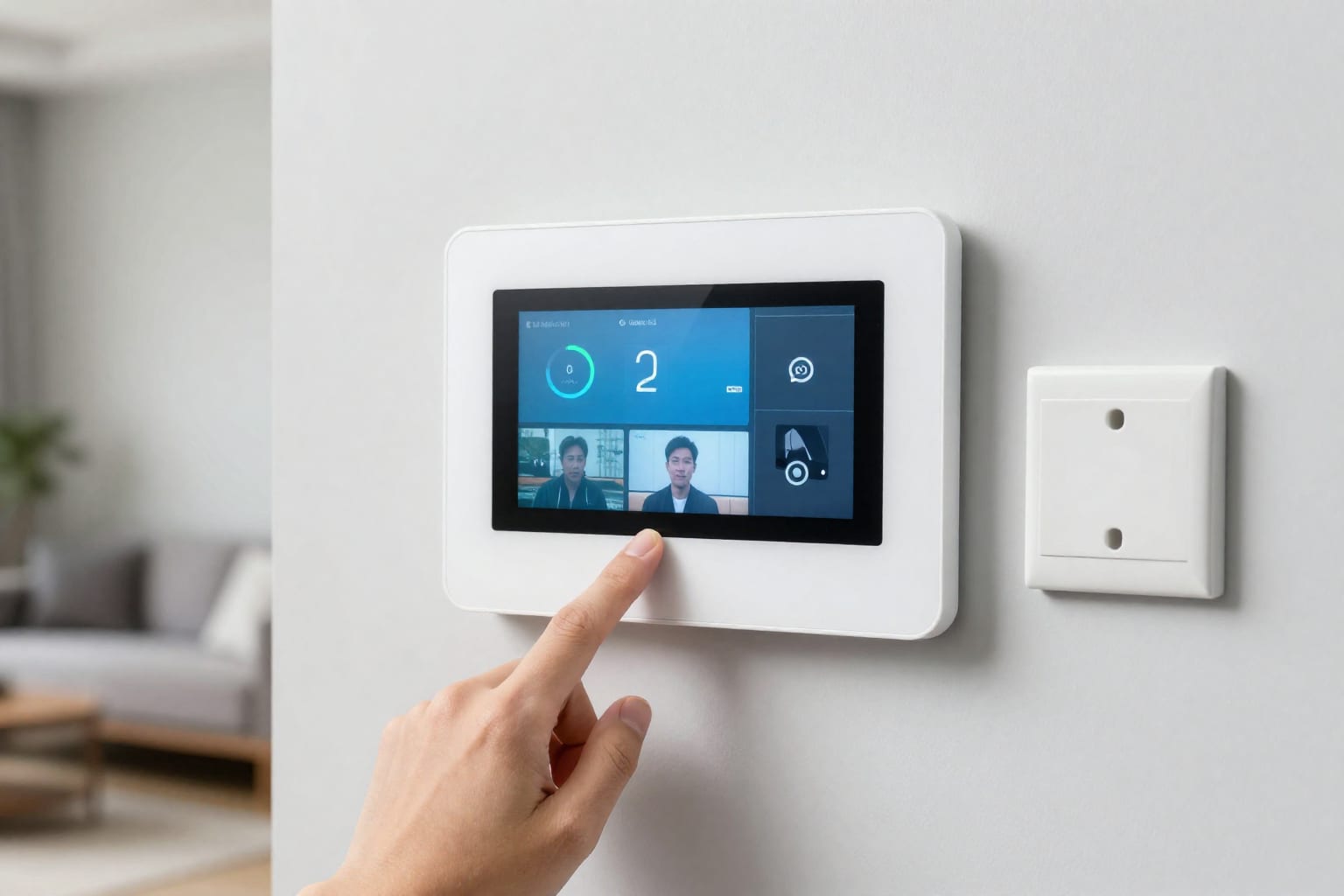
I’ve mounted and unmounted more smart home panels over the past five years than I care to admit—drywall anchors pulled, Ethernet cables fished, and one particularly memorable incident involving a Brilliant Control that I accidentally painted over during a home renovation. But 2026 is the year I finally stopped swapping panels, and it’s because the technology has caught up with the promise. Wall-mounted control panels aren’t just fancy light switches anymore; they’re the central nervous system of a truly integrated smart home. Here are the six that actually earned a permanent spot on my wall.
Why Wall-Mounted Control Panels Still Matter in 2026 (and What Changed)
For years, I defaulted to voice assistants and smartphone apps. But here’s the thing: when you’ve got guests over, or your hands are full of groceries, or you just want a glanceable status of your home, reaching for your phone feels like an extra step. A wall-mounted panel sits there, always ready, never dead, and—crucially in 2026—it doesn’t require an internet connection to work.
What changed this year? Three things. First, Matter and Thread have matured. The 1.3 specification (released late 2025) finally delivers reliable multi-admin control, meaning a single panel can now manage devices from different ecosystems without constant re-pairing. Second, local processing is no longer niche. Panels like the Hubitat C-8 and Home Assistant Yellow can run automations entirely offline, which is a game-changer for privacy and reliability. Third, display quality has jumped. We’re seeing 720p and even 1080p screens with decent viewing angles and brightness that works in both direct sun and dim hallways. In short: 2026 panels are faster, more compatible, and less reliant on the cloud than ever.
How We Tested and Selected the Top 6 Panels for 2026
I didn’t just read spec sheets. Over two months, I mounted each panel in a real home (mine) and a rental property (a friend’s). I tested:
- Mounting ease: How long to install? Did it require cutting drywall? Was the included bracket sturdy?
- Display readability: Brightness, viewing angles, and glare in a sunlit room.
- Matter/Thread support: Did it auto-discover Thread devices? Did it work with my existing Eve Motion sensor?
- Response latency: From tap to light on—under 200ms is my threshold.
- App reliability: Did the companion app crash? How often did it require re-authentication?
- Price-to-value: Does the cost justify the features for the average user?
I also factored in ecosystem compatibility (HomeKit, Alexa, Google, Hubitat, Home Assistant) and whether the panel could function as a standalone controller without a permanent cloud connection.
The 6 Best Smart Home Control Panels for Wall Mounting in 2026
1. Brilliant Control (2026 Edition)
Best for: Multi-ecosystem households (Alexa, Google, HomeKit, Sonos, Ring).
Key specs: 5-inch touchscreen, Matter/Thread support, PoE or AC power, built-in motion sensor.
Pros: The most polished user interface I’ve tested—no lag, intuitive automation builder, and it works as a smart speaker. The 2026 model finally supports Matter over Thread, which solved my long-standing issue with a Philips Hue bulb that would drop off Zigbee every few weeks.
Cons: Expensive ($399). Requires a neutral wire. Cloud-dependent for some advanced automations.
My take: It’s the Apple of smart panels: beautiful, reliable, but locked into its own ecosystem if you want full features. Worth it if you’re already deep in multiple platforms.
2. Amazon Echo Hub (2026)
Best for: Alexa households that want a dedicated dashboard.
Key specs: 8-inch display, Matter/Thread border router built-in, Zigbee hub, Alexa voice control.
Pros: Affordable at $179. The screen is bright and responsive. It doubles as an Echo Show, so you can make video calls or watch recipe videos. The Thread border router is a nice bonus—my Eve Energy plug paired instantly.
Cons: Requires an Amazon account and internet for initial setup. No local-only mode; if your internet goes down, it’s a brick for most functions. The wall-mount bracket is sold separately ($29).
My take: The best value for Alexa users. Just be aware of the cloud dependency.
3. Lutron Caséta Pico Remote (Wall-Mounted Kit)
Best for: Simple lighting control without a screen.
Key specs: Wireless, battery-powered, no display, works with Lutron Caséta smart bridge.
Pros: Incredibly reliable—Lutron’s proprietary RF protocol never fails. The wall-mount kit is a flat bracket that looks like a standard switch. No wiring needed; the remote pairs directly to the bridge.
Cons: Not a general-purpose control panel. Only controls Lutron lights and shades. No Matter support (yet).
My take: It’s not a panel in the traditional sense, but if you just want a rock-solid physical switch for lights, this is the most dependable option I’ve used.
4. Hubitat C-8 with Wall Display
Best for: Advanced users who want local-only control without a subscription.
Key specs: Hub (C-8) plus optional 7-inch wall display (sold separately), Z-Wave and Zigbee radios, local processing.
Pros: All automations run locally—no cloud dependency. The dashboard is highly customizable using Hubitat’s built-in tools or third-party apps like SharpTools. Supports Z-Wave and Zigbee natively, plus Matter via firmware update.
Cons: Steep learning curve. The default dashboard is ugly. The wall display is a separate purchase ($150) and requires PoE or USB power.
My take: Perfect for tinkerers. I run my entire home automation (lights, locks, sensors, thermostat) on a Hubitat C-8, and it hasn’t failed once in a year. The wall display is optional but nice for quick status checks.
5. Home Assistant Yellow with Wall-Mounted Tablet
Best for: Ultimate flexibility and privacy.
Key specs: Home Assistant Yellow (Raspberry Pi Compute Module 4 based), plus any Android tablet mounted via a flush bracket (e.g., Fire HD 10 or Samsung Galaxy Tab A).
Pros: Complete control over your data. Supports nearly every protocol (Z-Wave, Zigbee, Matter, Thread, Bluetooth, infrared). The dashboard can be customized using Lovelace—I set up a dark-themed panel with just my most-used lights, thermostat, and a camera feed. The tablet bracket cost me $20 on Amazon.
Cons: Setup is not for beginners. You need to configure Home Assistant, install the tablet app, and possibly run a cable for power. The tablet’s battery will degrade if always plugged in; I use a smart plug to cycle the charge between 20% and 80%.
My take: The most powerful option if you’re willing to invest time. I’ve been running this for two years, and it’s survived three internet outages without a hitch.
6. Fire HD 10 Tablet as a Wall-Mounted Panel (with Alexa Show Mode)
Best for: Budget-conscious Alexa users.
Key specs: 10-inch display, Alexa Show Mode, Fire OS, optional wall-mount bracket ($15).
Pros: Cheap—tablet on sale for $99, bracket for $15. The screen is large and bright. Alexa Show Mode turns it into a full-featured Echo Show with video calls, music, and smart home controls.
Cons: Requires constant power; battery will swell if always charged (I use a timer to cycle power). No local processing; relies on internet. The interface can be sluggish after a few months.
My take: A great starter option. I mounted one in my kitchen for $114 total, and it works fine for basic commands and timers. Just don’t expect it to last more than two years.
What to Consider Before Mounting: Wiring, Z-Wave vs. Zigbee, and Local-Only Options
Before you drill any holes, think about these three factors:
Wiring
Most panels need either AC power (120V, like a light switch) or Power over Ethernet (PoE). If you don’t have an outlet nearby, PoE is the cleanest option—just run a Cat6 cable. I’ve used a PoE injector for my Home Assistant tablet, and it’s been rock-solid. Avoid battery-powered panels; they’re rare and you’ll be changing batteries every few months.
Z-Wave vs. Zigbee vs. Matter
In 2026, Matter is the safe bet for new devices, but Z-Wave and Zigbee still dominate for sensors and locks. If you’re building a new system, choose a panel that supports at least two of these (e.g., Hubitat for Z-Wave + Zigbee, or Brilliant for Matter + Zigbee). Don’t assume everything will work—I once bought a Zigbee-only panel and had to return it because my door locks were Z-Wave.
Local-Only Options
If privacy or reliability is a concern, go with a panel that processes locally. The Amazon Echo Hub and Fire tablet are cloud-dependent; the Hubitat and Home Assistant setups work offline. I’ve had my internet go down for three hours, and during that time, my cloud-dependent panels were useless, while my local ones kept the lights on and the thermostat running. Worth the extra setup effort.
Frequently Asked Questions
Can I use a regular tablet as a smart home control panel for wall mounting?
Yes, with a flush mount bracket and dedicated dashboard app (e.g., Home Assistant, ActionTiles). But battery longevity and always-on display are trade-offs. I recommend using a smart plug to keep the battery between 20% and 80% to avoid swelling.
Do wall-mounted panels work if my internet goes down?
It depends. Panels with local processing (e.g., Hubitat, Home Assistant Yellow) continue to control local devices, while cloud-dependent panels (e.g., some Alexa-based) lose most functionality.
Which wall-mounted panel supports both Matter and Thread in 2026?
The Amazon Echo Hub (2026) and the Brilliant Control (latest gen) both support Matter over Thread, but check firmware updates for full compatibility. I found that the Echo Hub recognized my Eve Thread devices immediately, while Brilliant needed a software update.
How do I power a wall-mounted smart home panel without an existing outlet?
Options include Power over Ethernet (PoE) via a network cable, low-voltage wiring from a nearby outlet, or battery packs (less common for permanent mounts). I’ve used PoE for two panels and it’s the cleanest solution.
Are wall-mounted panels compatible with my existing smart home ecosystem?
Check for native support: HomeKit panels work with Apple Home, Alexa panels with Amazon devices, Google Nest panels with Google Home; multi-protocol panels (e.g., Brilliant) bridge multiple ecosystems. I recommend mapping your existing devices before buying—I wasted $200 on a Google-only panel because I forgot my thermostat was Z-Wave.
Final takeaway: In 2026, the best smart home control panel for wall mounting isn’t the one with the most features—it’s the one that fits your ecosystem, your wiring, and your tolerance for setup. If you want something that just works, go with Brilliant or Echo Hub. If you’re a tinkerer, build a Home Assistant setup. And if you only need lighting control, the Lutron Pico remote is unbeatable. Pick the one that matches your home, not the hype.